
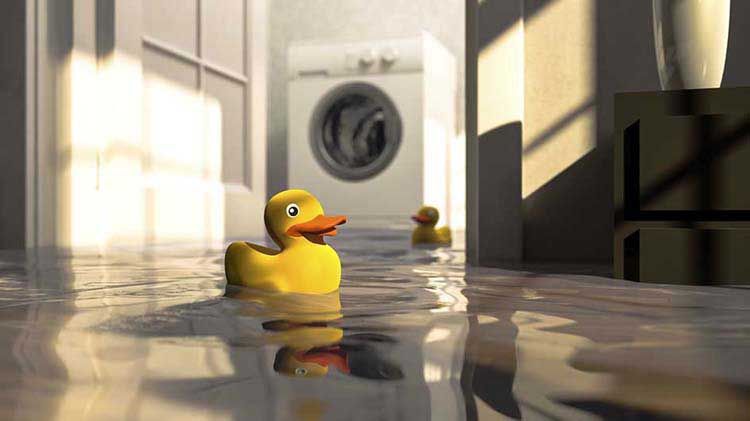
If you’ve experienced water in your basement, you know it’s about much more than a wet floor. It can be overwhelming, stressful, and emotionally exhausting. Whether it was caused by heavy rain, overland flooding, or a plumbing issue, seeing water inside your home can leave you wondering where to begin. While it’s natural to want everything back to normal as quickly as possible, one of the most important steps is also one of the hardest—being patient.
Drying out a basement properly takes time. Rushing into replacing flooring or installing new materials before the concrete has completely dried can lead to bigger problems down the road, including mould growth, unpleasant odours, damaged flooring, and costly repairs.
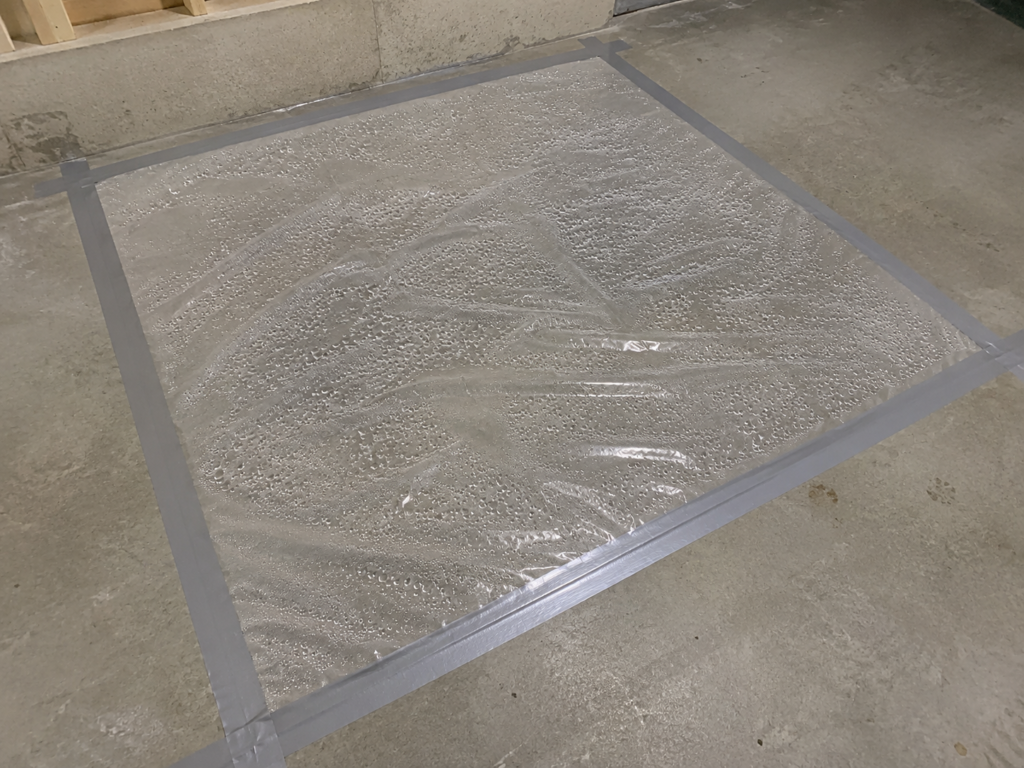
A simple moisture test can help you determine if your concrete floor is ready for the next step. Cut a piece of clear plastic or use a plastic bag and tape it securely to the concrete floor, making sure all four sides are sealed. Leave it in place for at least 48 hours. When you return, if you see condensation between the concrete and the plastic surface, the concrete is still holding water and needs more drying time. If the plastic remains dry, you’re much closer to being ready for repairs.
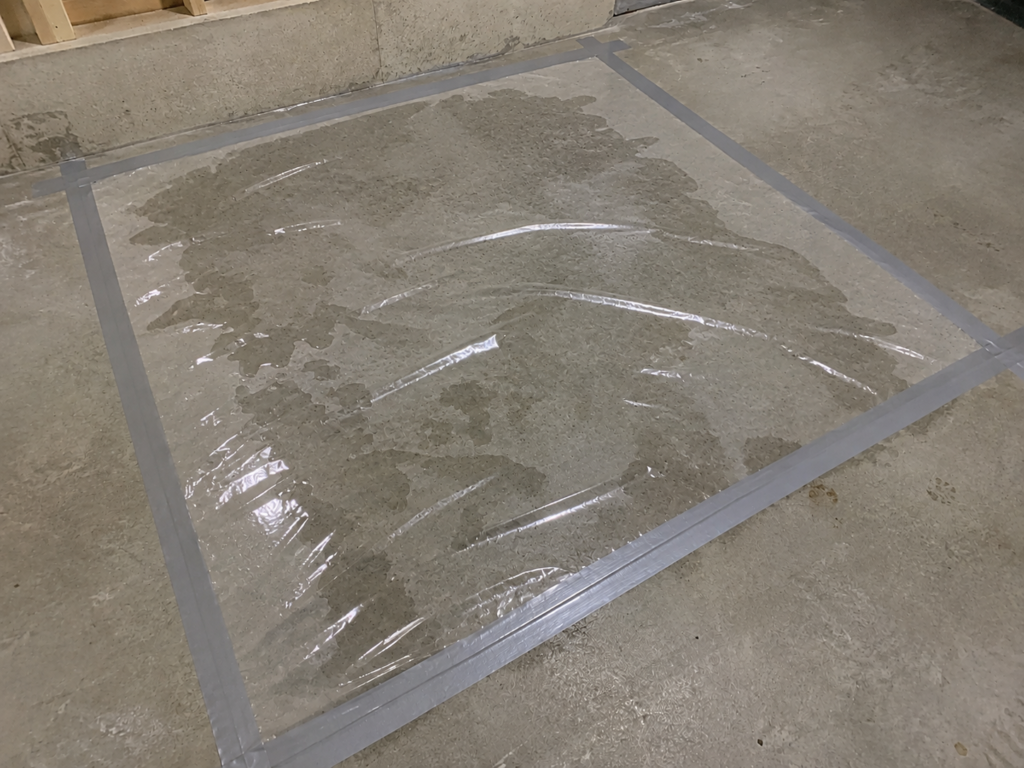
If you return and there is moisture on top of a plastic sheet is often a sign that there is too much humidity in the room, rather than water coming through the floor.
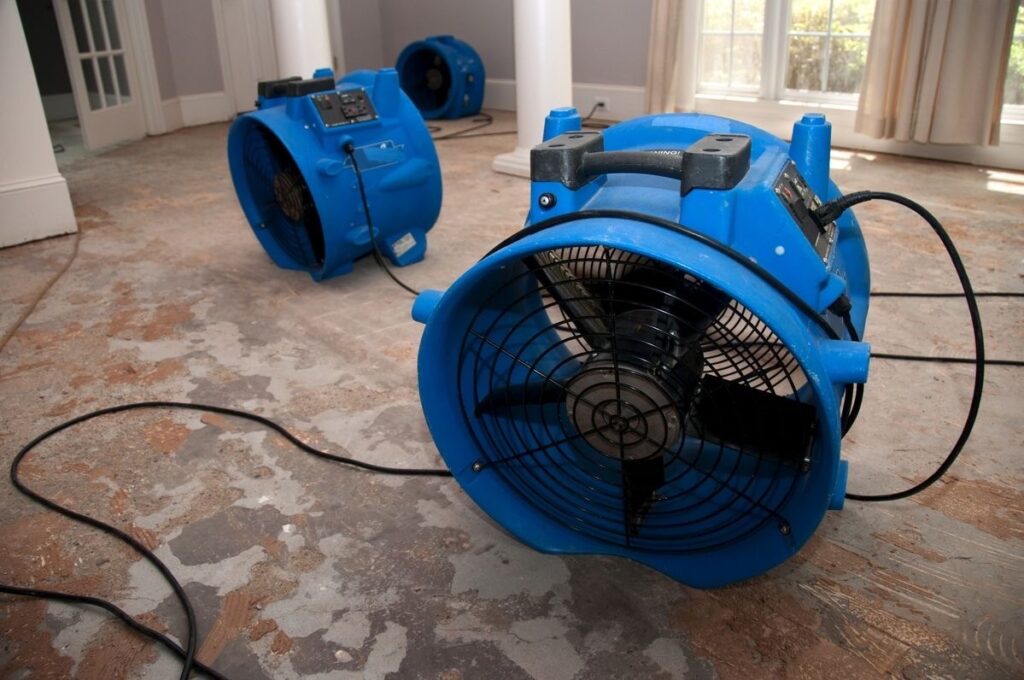
You can increase air circulation by using fans, and use a dehumidifier to remove excess moisture from the air and maintain a healthier environment.
Aim for a relative humidity level between 30% and 50% in your basement.
Remember, drying a basement isn’t just about removing visible water. Concrete acts like a sponge and can retain moisture for weeks depending on humidity, temperature, and airflow. Running fans, dehumidifiers, and ensuring good ventilation will all help speed up the process safely.
Although the cleanup can feel endless, every step you take today helps protect your home for years to come. Taking the time to dry things properly gives your new flooring, walls, and finishes the best possible chance of lasting.
Your home has been through a lot, and so have you. With patience, the right materials, and a little perseverance, you can rebuild with confidence, knowing you’ve laid the foundation for a safe, healthy, and durable space once again.